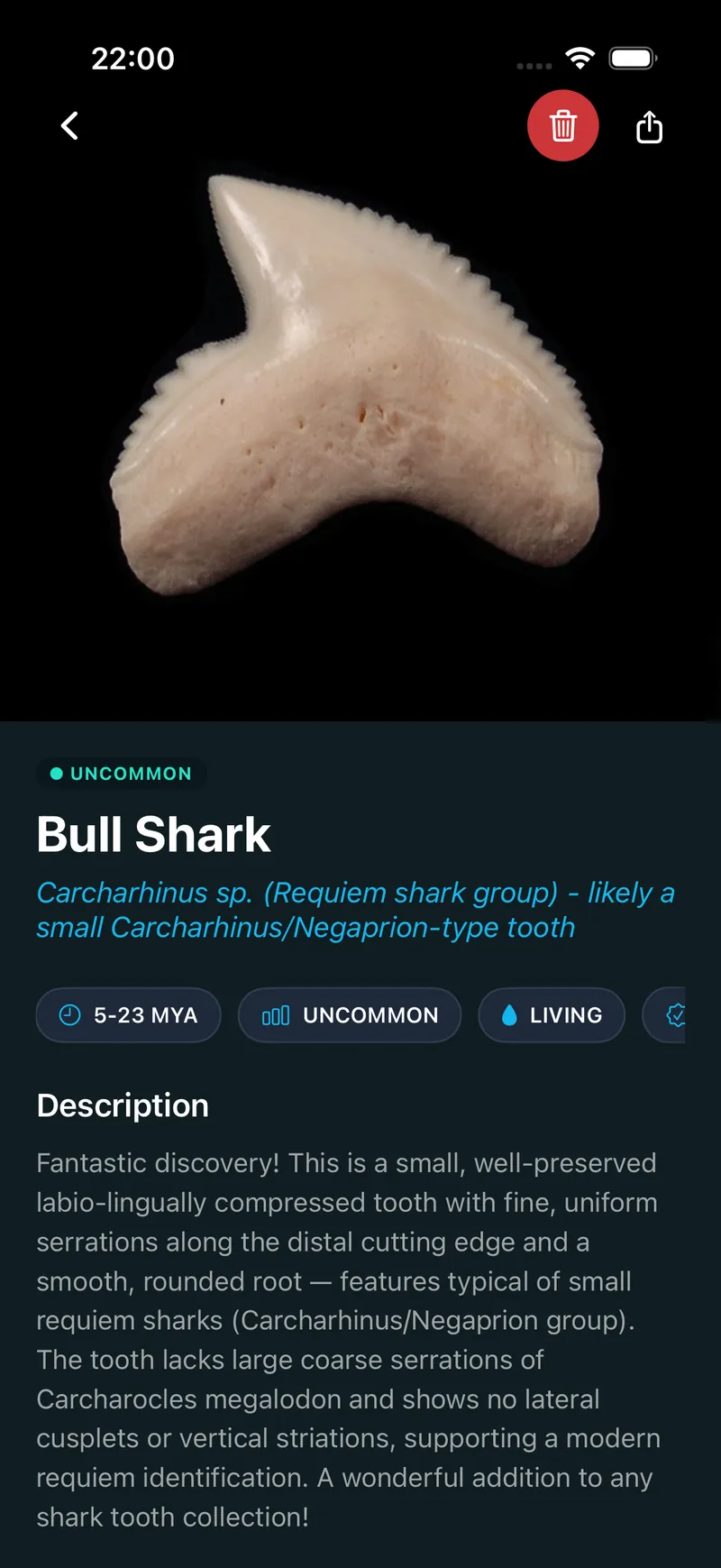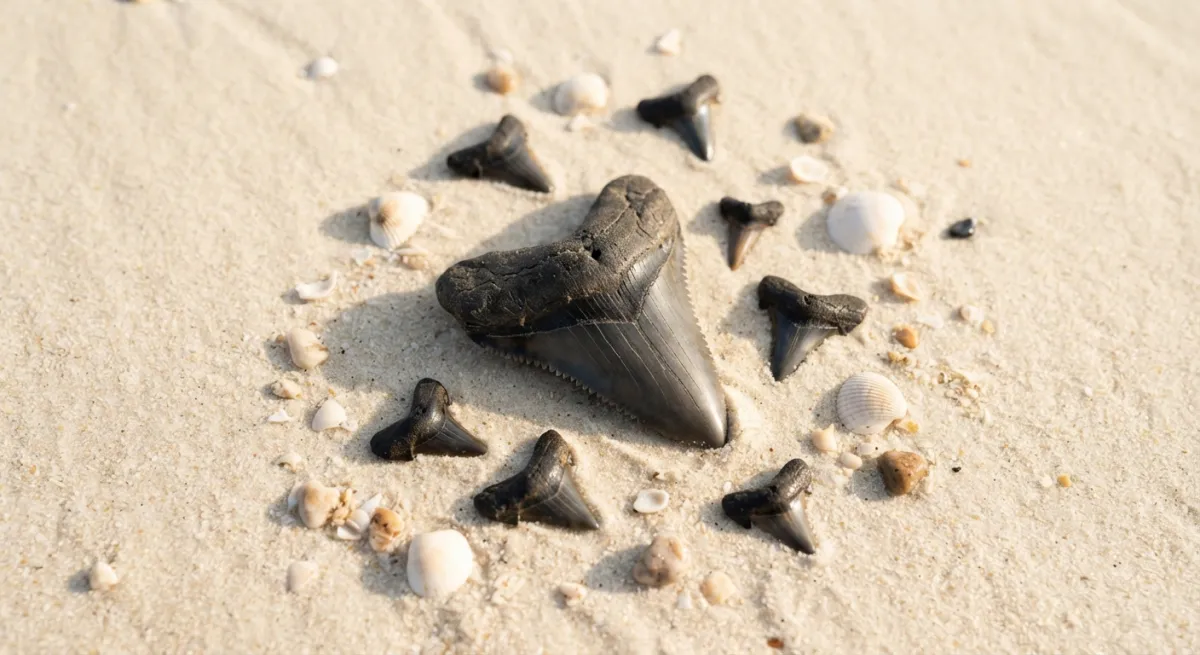
Megalodon Tooth Identification Features
Megalodon tooth identification starts with a combination of shape, serrations, root structure, and fossilization signs. No single feature proves the species or authenticity on its own.
Size Variation
Megalodon tooth size varies with the individual shark and the tooth's position in the jaw. Large examples can approach or exceed 7 inches, but genuine teeth can be much smaller. Size alone is not an authenticity test.
Triangular Shape with Serrations
Megalodon teeth are broadly triangular with fine, sharp serrations along both cutting edges. The serrations are typically more pronounced than those of modern Great White sharks.
Robust Root System
The root is typically thick and substantial, often V-shaped when viewed from the side. Authentic specimens show natural nutrient grooves and attachment points.
Fossilization Indicators
Genuine Megalodon teeth are fossilized, making them heavier than modern teeth and typically dark brown, black, or gray in color due to mineral replacement over millions of years.
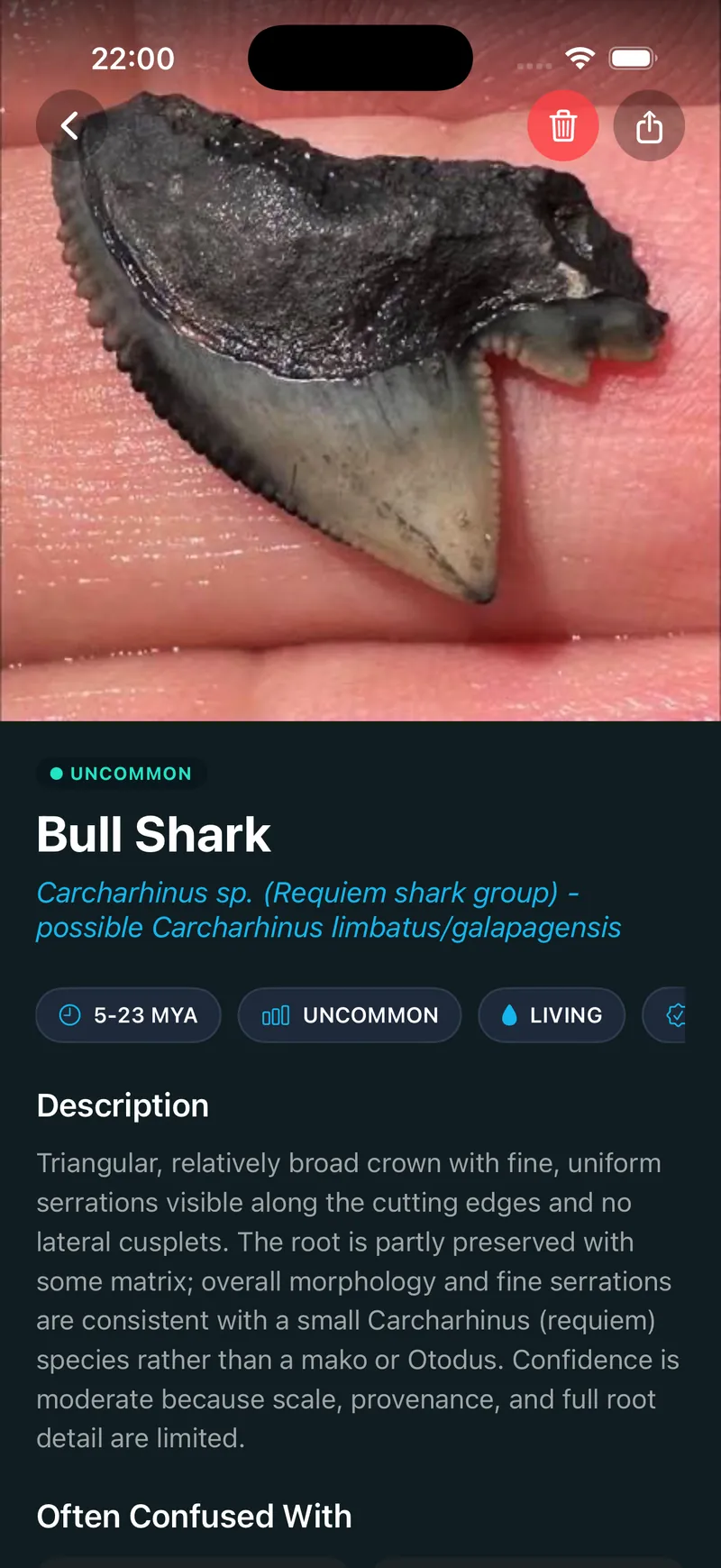
How Size Affects Megalodon Tooth Identification
Tooth size can provide context, but it does not map neatly to a juvenile, sub-adult, or adult shark. Tooth position in the jaw changes both size and shape, which makes rigid classifications unreliable for isolated fossils.
Measure Consistently
Record the tooth's maximum height and width, then photograph it beside a ruler. Consistent measurements make it easier to compare the same tooth with museum examples and identification references.
Compare Shape and Size Together
A broad triangular crown, serrated cutting edges, and a robust root are more useful together than a size threshold. Wear, breaks, and restoration can also change the apparent dimensions.
Avoid Body-Length Estimates From One Tooth
Researchers need the tooth's original jaw position and a suitable scientific model to estimate body length. An isolated tooth is not enough for a precise estimate.
Found a tooth like this?
Snap a photo and get a likely species match, age and rarity in seconds.
Download on theApp StoreAvoiding Fakes and Misidentifications
The popularity of Megalodon teeth has led to numerous fakes and misidentifications in the fossil market. Learning to spot authentic specimens protects collectors and ensures scientific accuracy.
Common Fake Indicators
Replica teeth are often too perfect, lacking natural wear and damage. They may feel light for their size, have uniform coloration, or display machine-made serrations that are too regular.
Misidentified Species
Large Great White or Tiger shark teeth are sometimes misidentified as small Megalodons. True Megalodons have broader, more robust teeth with different serration patterns.
Composite and Restored Teeth
Some "complete" teeth are actually fragments glued together or have sections restored with resin. Look for color variations, unnatural seam lines, or sections that appear too perfect.
Professional Authentication
For valuable specimens, consider professional authentication from paleontologists or reputable fossil dealers who can verify authenticity through detailed analysis.