Getting Started with Shark Tooth Identification
Welcome to shark tooth identification! This beginner's guide will teach you everything you need to know to start identifying shark teeth with confidence.
What Makes Shark Teeth Special?
Unlike human teeth, sharks continuously shed their teeth throughout their lives. A single shark can lose up to 35,000 teeth in its lifetime! This constant shedding is why shark teeth are among the most commonly found fossils.
Modern vs. Fossilized Teeth
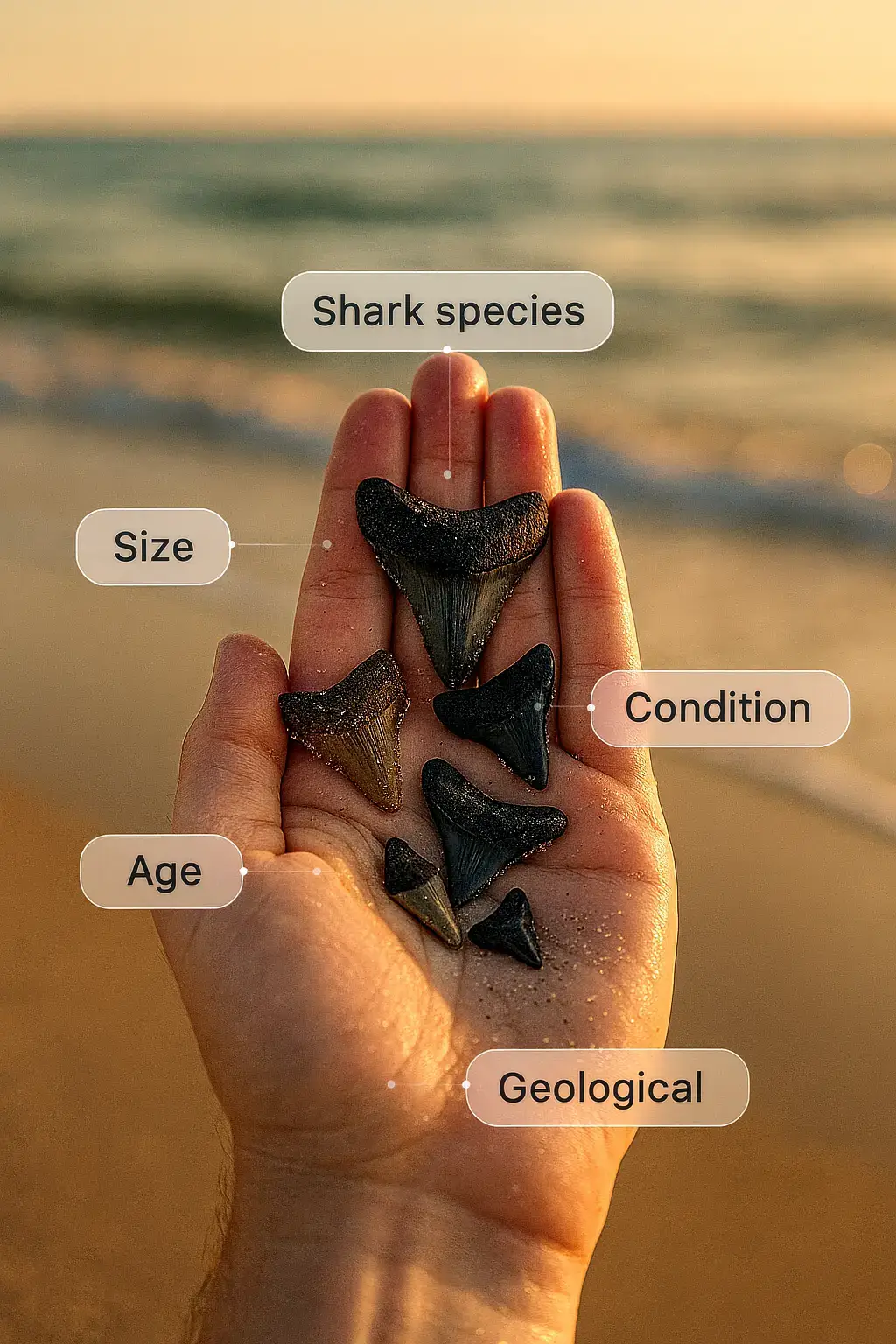
Modern Teeth: Usually white, cream, or light gray in color. These come from recently deceased sharks and are lighter in weight.
Fossilized Teeth: Dark brown, black, or gray due to mineral replacement over thousands of years. They feel heavier and are more durable.
Basic Tooth Anatomy
- Crown: The visible part above the gum line, used for cutting or gripping
- Root: The part that attaches to the jaw, often V-shaped or broad
- Serrations: Tiny saw-like edges along the crown for cutting
- Cusp: The pointed tip of the tooth
Essential Tools for Beginners
Start with a small brush for loose sand, a magnifying glass for details, a ruler for measurements, and the identification app for a likely species match.
Common Shark Teeth Species for Beginners to Learn
Start your shark tooth identification journey by learning these common species. These are the teeth you're most likely to find and easiest to identify.
Tiger Shark - Great for Beginners
Shape: Curved and hook-like with a distinctive "tiger claw" appearance
Size: 1-2 inches for adult teeth
Serrations: Prominent, coarse serrations on both edges
Where Found: Common on Gulf Coast beaches, especially Florida
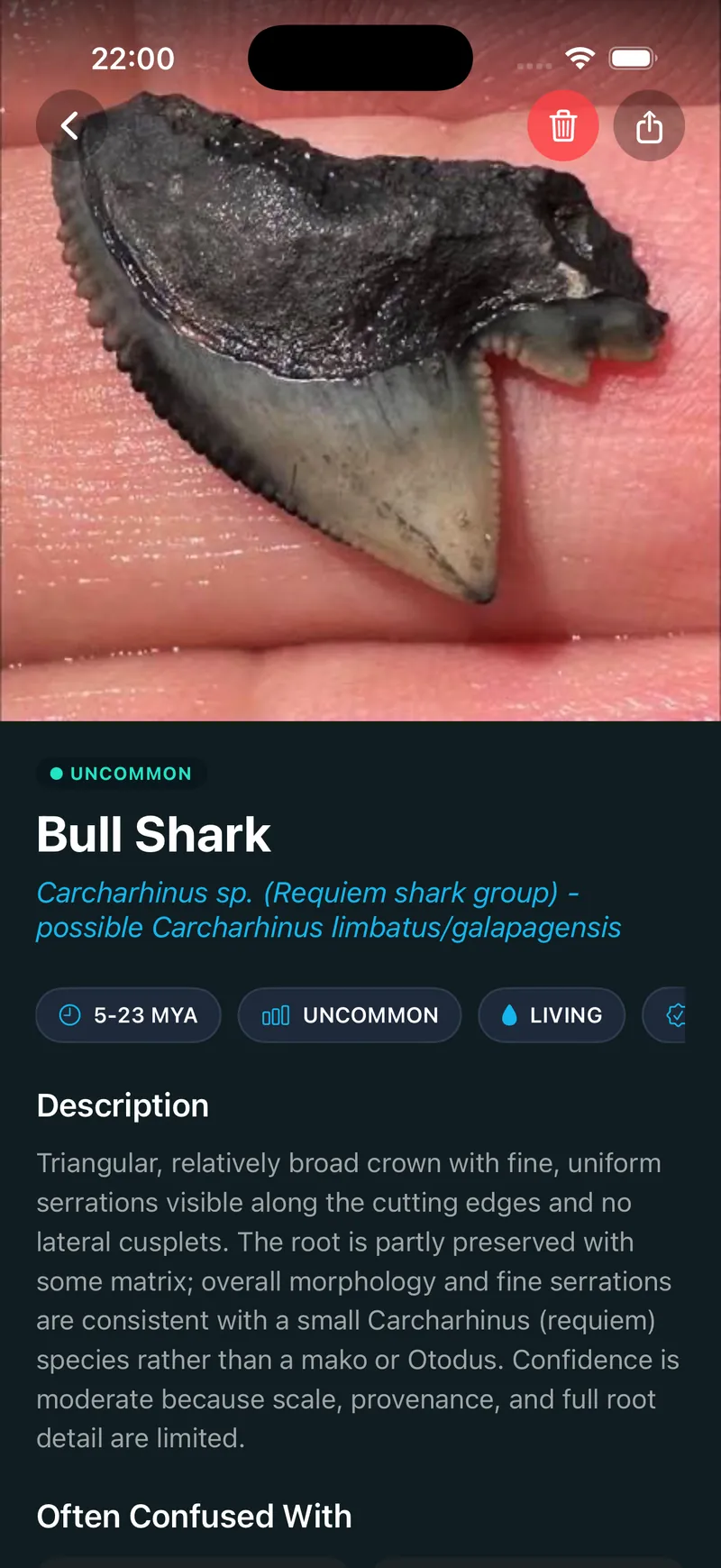
Bull Shark - Easy to Identify
Shape: Broad, triangular with a wide base
Size: 1-1.5 inches typical
Serrations: Fine serrations, more pronounced on upper teeth
Distinguishing Feature: Very robust, thick appearance
Sand Tiger Shark - Beginner Friendly
Shape: Long, narrow, and pointed like a needle
Size: 0.5-1 inch common
Serrations: Usually smooth edges, no serrations
Special Note: Often found in large quantities
Lemon Shark - Good Practice Species
Shape: Narrow and pointed but broader than Sand Tiger
Size: 0.75-1.25 inches typical
Color: Often yellowish tint (hence the name)
Serrations: Fine serrations on edges
Use Technology to Learn
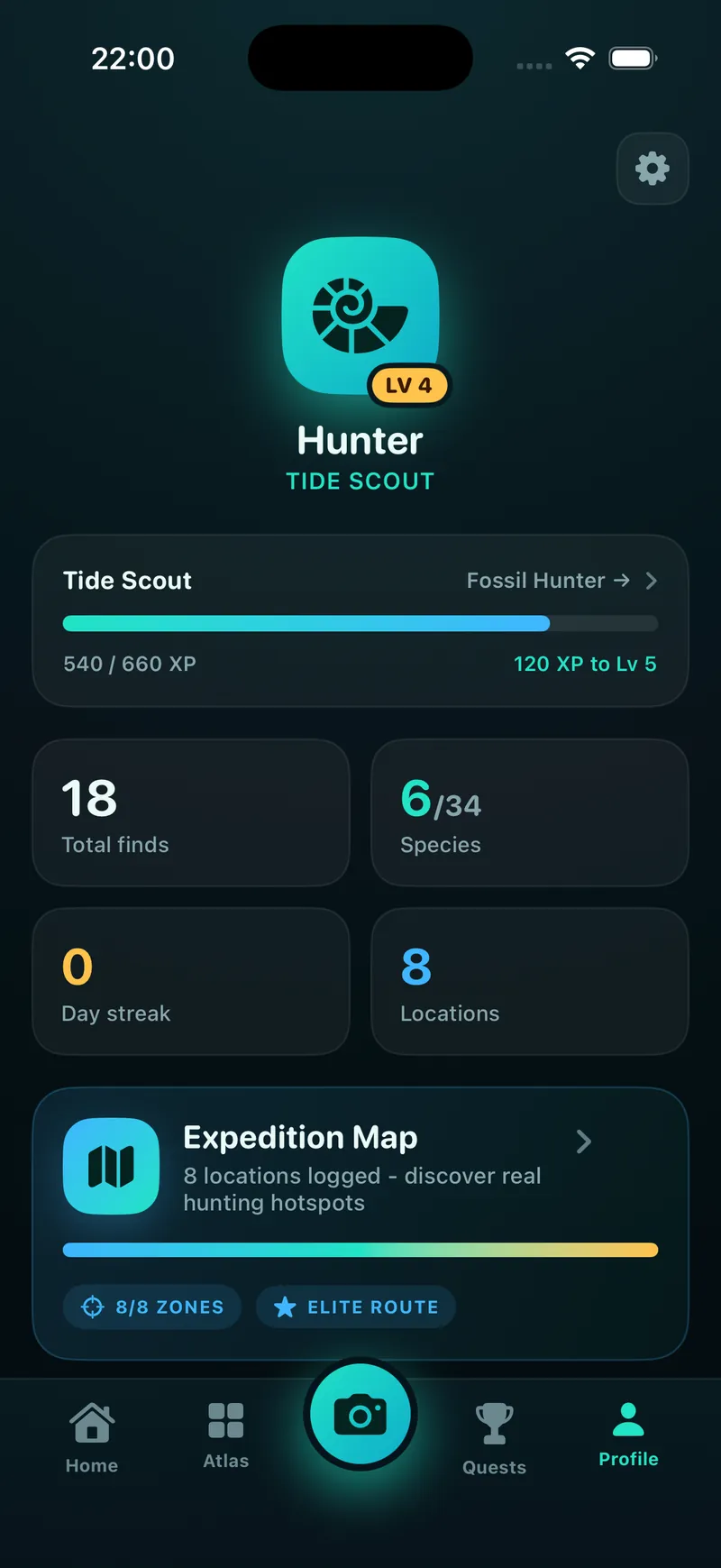
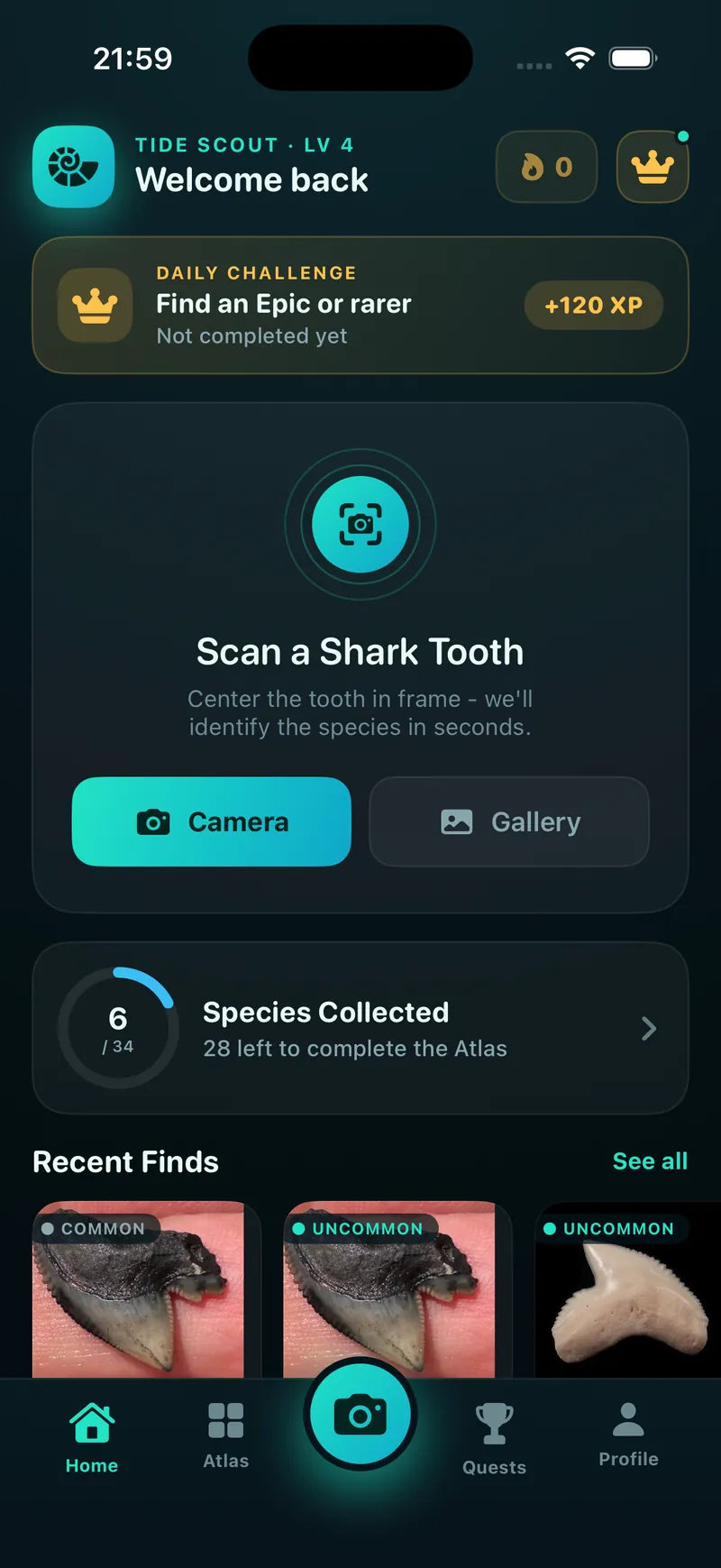
Use the app's likely match as a starting point, then compare the crown, root, serrations, and proportions with the species guide.
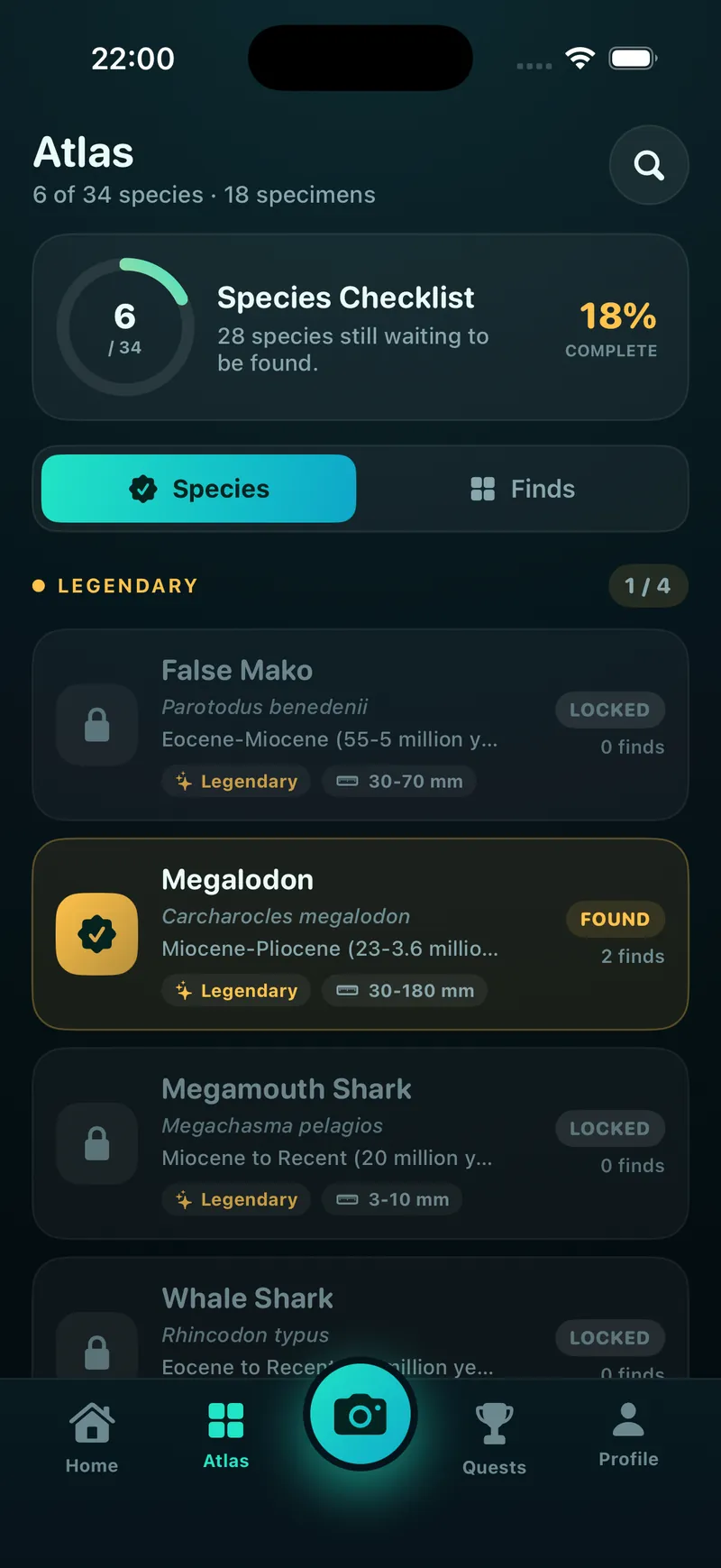
Found a tooth like this?
Snap a photo and get a likely species match, age and rarity in seconds.
Download on theApp StoreStep-by-Step Shark Tooth Identification Process
Follow this systematic approach to identify any shark tooth you find. With practice, this process becomes second nature.
Step 1: Clean and Examine
Gently brush away sand and debris. Look at the tooth under good lighting. Take note of the overall condition and any damage that might affect identification.
Step 2: Measure the Tooth
Measure length from tip to root base and width at the widest point. Size is crucial for species identification and determining if it's from a juvenile or adult shark.
Step 3: Analyze the Shape
Is it triangular, curved, needle-like, or hook-shaped? The overall crown shape is the most important identifying feature for beginners to master.
Step 4: Check for Serrations
Use a magnifying glass to examine the edges. Are there serrations? If yes, are they fine or coarse? Some species have smooth edges with no serrations.
Step 5: Examine the Root
Look at the root structure. Is it V-shaped, U-shaped, or flat? The root can provide additional confirmation of species identification.
Step 6: Determine Age
Assess if it's modern (white/light) or fossilized (dark/heavy). This helps narrow down possible species and locations where it might have been found.
Step 7: Use Reference Materials
Compare your tooth with identification charts and species guides. Use the app for a likely match, then check that suggestion against the visible features.
Step 8: Record Your Find
Keep a log of your identifications including species, size, location found, and date. This helps you learn patterns and track your collecting success.