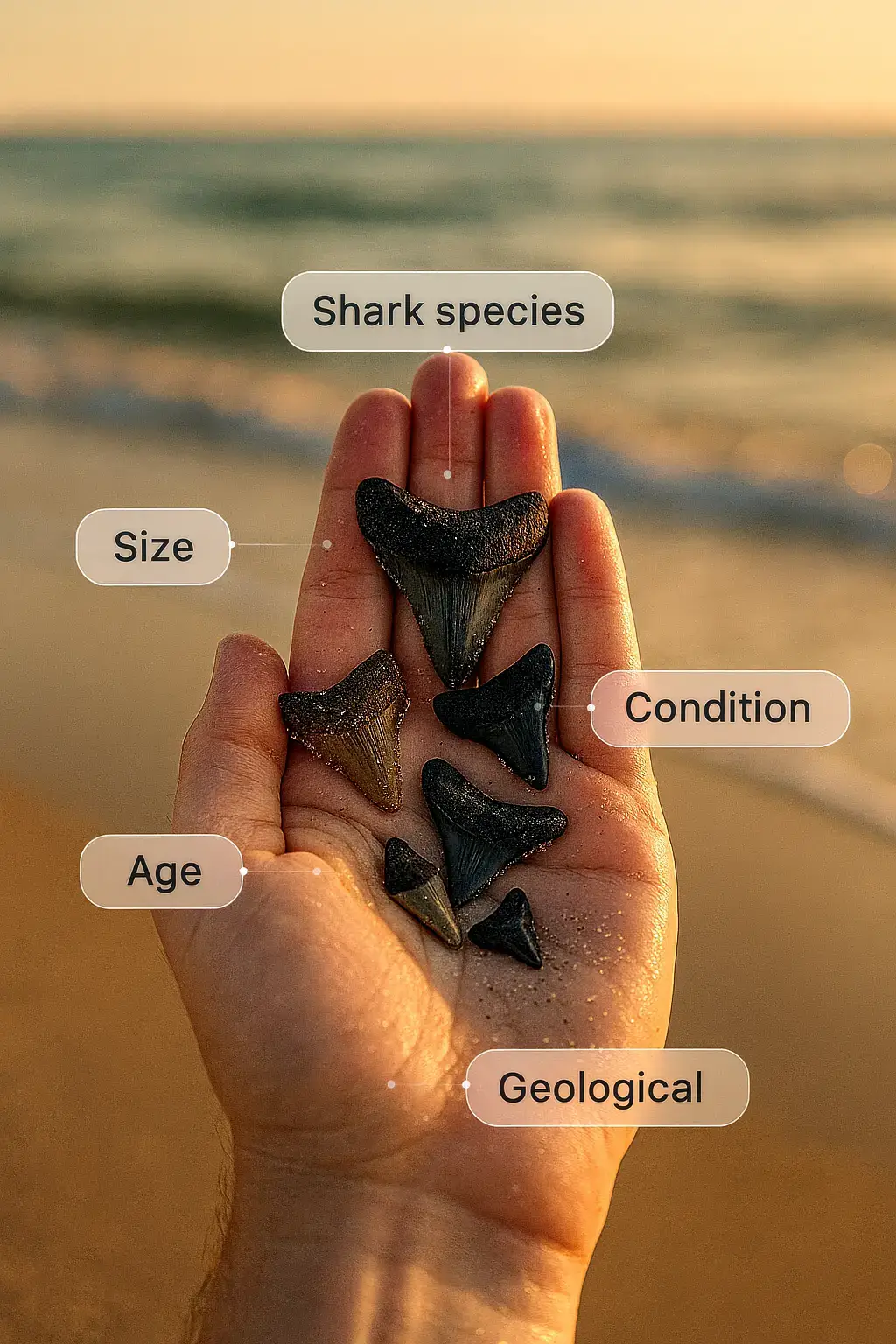
Modern Shark Teeth Types
Modern shark teeth vary by species and by position in the jaw. Compare several visible features before choosing a likely match in the app.
Great White Shark Teeth
Great White shark teeth are triangular with serrated edges, typically 1-2 inches in length. They're broad at the base and taper to a sharp point, perfect for cutting through prey.
Tiger Shark Teeth
Tiger shark teeth are distinctive with their curved shape and pronounced serrations. They're designed for both cutting and gripping, making them unique among shark teeth types.
Bull Shark Teeth
Bull shark teeth are triangular and broad, with fine serrations. Upper teeth are broader for cutting, while lower teeth are narrower and more pointed for grasping.

Prehistoric Shark Teeth Types
Fossilized shark teeth represent millions of years of evolution and are among the most popular finds for collectors. These prehistoric specimens tell the story of ancient marine ecosystems.
Megalodon Teeth
Megalodon teeth are the most sought-after fossils, ranging from 3-7 inches in length. They're triangular with fine serrations and typically dark brown or black from fossilization.
Otodus Teeth
Otodus teeth are smooth-edged and triangular, representing the ancestor of Megalodon. They're typically 2-4 inches and lack the serrations of their descendants.
Sand Tiger Shark Fossils
Fossilized Sand Tiger shark teeth are narrow and curved with smooth edges, often found in large quantities at fossil sites worldwide.
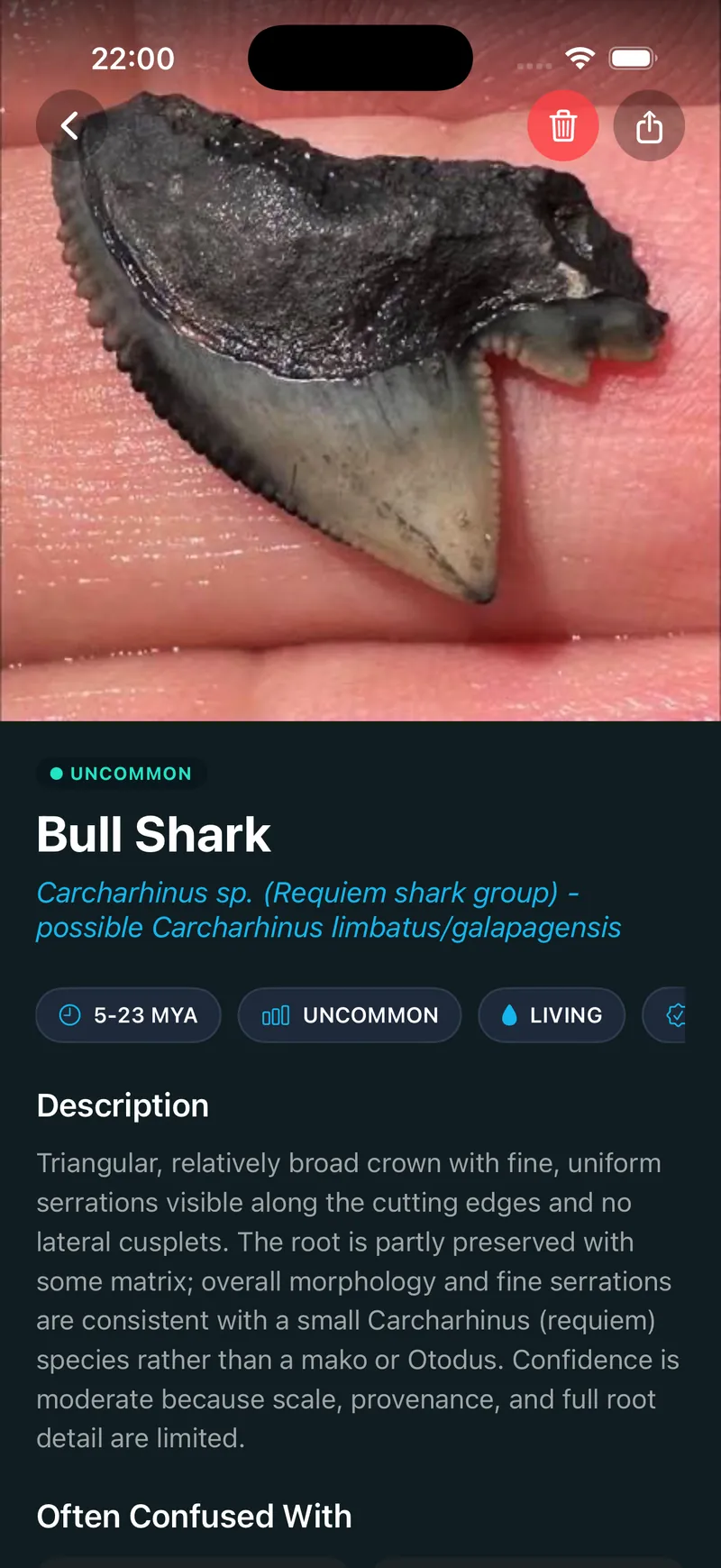
Found a tooth like this?
Snap a photo and get a likely species match, age and rarity in seconds.
Download on theApp Store
Shark Teeth Identification Features
Shark tooth identification relies on visible features such as crown shape, root structure, serrations, proportions, and wear. The app suggests a likely species you can compare with those details.
Size and Shape
Tooth size varies dramatically between species, from tiny cookie-cutter shark teeth to massive Megalodon specimens. Shape ranges from needle-like to broadly triangular.
Serration Patterns
Serrations along tooth edges vary by species and diet. Cutting teeth have fine serrations, while gripping teeth may be smooth or have coarse serrations.
Root Structure
The root system provides crucial identification clues. Some species have deep V-shaped roots, while others feature broad, flat bases with nutrient grooves.